This (or something based on it) would make a great location that your characters have to visit in order to achieve their goals. Maybe something important is hidden there.
Nov
05
This (or something based on it) would make a great location that your characters have to visit in order to achieve their goals. Maybe something important is hidden there.
What a time to be alive.
Originally shared by Arduino
3D print and wear your own robotic owl that uses AI vision to see faces, judge emotions, and respond.
(via Make:)
I wouldn’t necessarily boast about being the guy who started Internet Explorer, myself, but this is a guy who knows tech, and his company is taking a different approach to neural interfaces: no implants, and the sensors are not on people’s heads but on their arms. I’ll watch it with interest, and a bit of skepticism.
NB: article needs a lot more punctuation.
Originally shared by Judah Richardson
From Elon’s Neuralink to Bryan Johnson’s Kernel, a new wave of businesses are specifically focusing on ways to access, read and write from the brain.
The holy grail lies in how to do that without invasive implants, and how to do it for a mass market.
https://techcrunch.com/2018/11/01/thomas-reardon-and-ctrl-labs-are-building-an-api-for-the-brain/
A lot of virtual reality stories since the dawn of cyberpunk have followed much the same pattern: they’re basically portal fantasies, transporting the users to a different and wonderful world, where danger is real in some poorly-justified way and the interface metaphor is overliteralized for plot purposes.
Actual virtual reality offers some more interesting possibilities, because it seems that the immersiveness makes it easy to shift perception of your own identity in ways that can have enduring psychological effects. Of course, that’s harder to write about.
Originally shared by Singularity Hub
How Virtual Reality Can Transform Who You Are
Crowdsourcing moral decisions yields some interesting insights, if not necessarily completely useful ones for the original purpose in view.
Originally shared by Singularity Hub
Building a Moral Machine: Who Decides the Ethics of Self-Driving Cars?
It’s harder than it used to be to present convincing tech interfaces on screen. In fact, it’s an expert’s job.
Originally shared by HACKADAY
If you’ve been watching science fiction TV shows for the last decade you’ve seen Seth Molson’s work. He talks to us about creating believable tech in movies and TV.
From the banks of levers and steam gauges of 1927’s Metropolis to the multicolored jewels that the crew would knowingly tap on in the original Star Trek, the entertainment industry has always struggled with producing imagery of advanced technology.…
http://hackaday.com/2018/10/29/seth-molson-is-designing-the-future-one-show-at-a-time/
If it matters to you how likely your future scenario is to be realized in a particular timeframe (and I’m not saying it should matter to you, but if it does), here are some basic guidelines for figuring that out. They’re not actually expressed in the form of rules, despite the headline.
Also a good way to check you’re not committing anachronism.
Originally shared by Joanne Manaster
How old were you when CRISPR got added to the dictionary? And what were your grandparents doing when DNA made its first appearance?
Now you can find out. Merriam-Webster has been promoting a search tool that lets you look up the words that got added to dictionary in the year you were born, or any other year dating all the way back to 1500. (Incidentally, the word illness got added that year.)
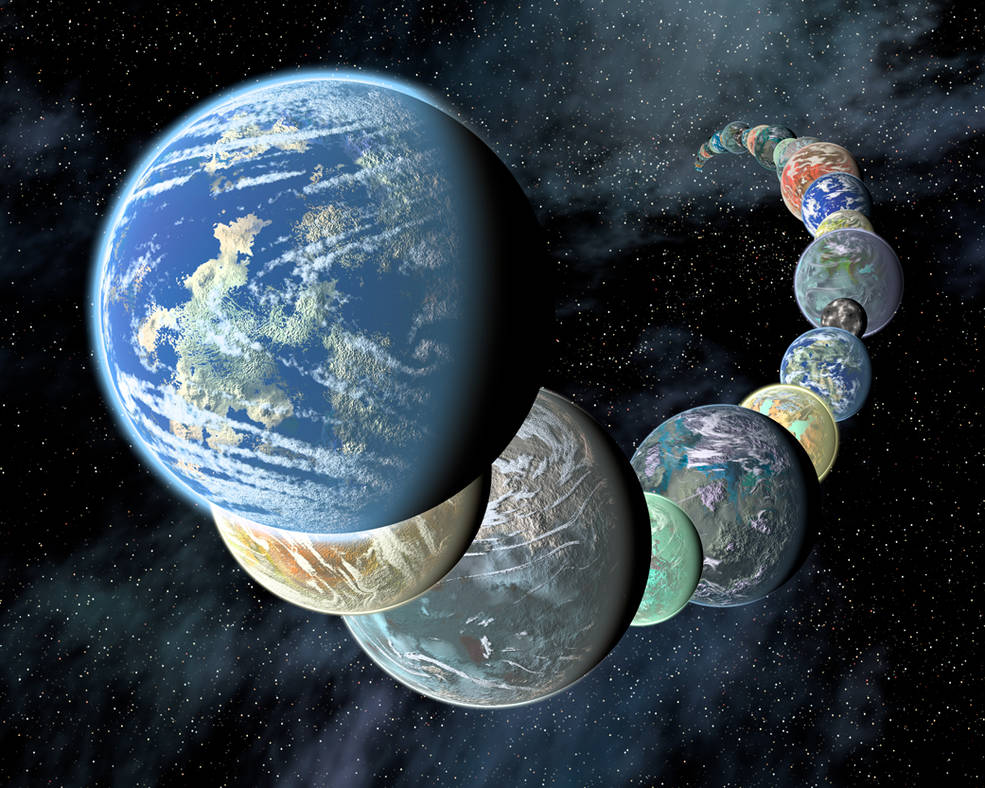
Originally shared by NASA
We are sizing up a galaxy of planets as we hunt for a world something like our own. We’ve found rocky planets in Earth’s size range, at the right distance from their parent stars to harbor liquid water. As space telescopes grow ever more sensitive, we’re beginning to zero in on evidence of life and what we consider potentially habitable worlds. Learn more: https://go.nasa.gov/2CFFxeP
Blurb:
“The year is 1095, Normandy, France. Five year old Skylar…”
Yeah, no, you lost me right there.
Behindthename.com has this to say about Skylar/Skyler/Schuyler:
From a Dutch surname meaning “scholar”. Dutch settlers brought the surname to America, where it was subsequently adopted as a given name in honour of the American general and senator Philip Schuyler (1733-1804).
This isn’t hard, people.