Open call: Science fiction dealing with medicine, health, and illness in up to 3000 words. Up to 20 pieces will be published in the competition anthology. Payment of at least 50 pounds for published pieces.
Lisa Cohen, sounds like something you might be into?
Here’s the interview I did yesterday with the Science Fiction & Fantasy Marketing Podcast, complete with show notes, links, and both video and audio formats.
Well, hey, look at that – because we did a Hangout On Air, this interview is already available. It’ll also come through as an audio-only podcast soon (I have a good face for radio, so if you want to spare yourself…).
Disclaimer: I don’t consider myself an “editing expert”. But I do know some things.
Originally shared by Science Fiction & Fantasy Marketing Podcast
Today we’ll talk to indie author and editing expert Mike Reeves McMillan about how to avoid common grammatical and formatting mistakes, and produce the sort of manuscript the traditional publishers are looking for.
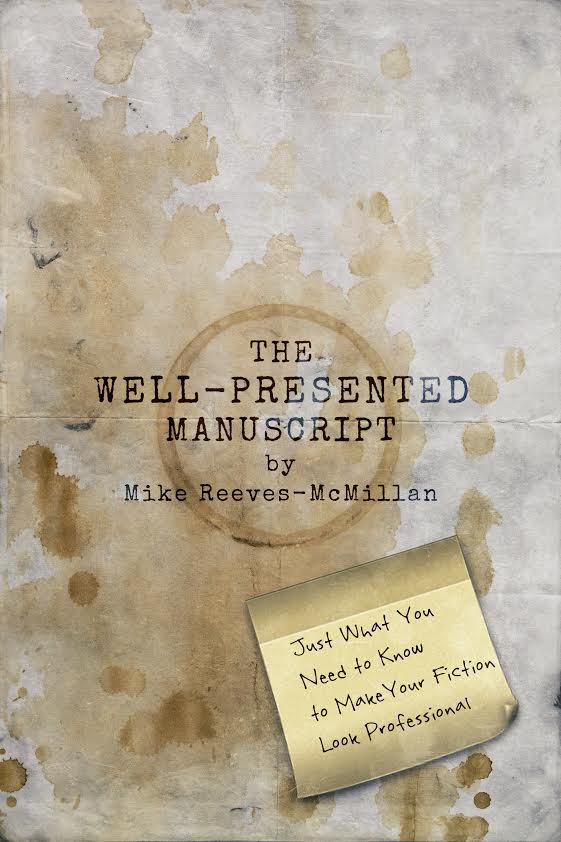
Just got finished recording a show with Science Fiction & Fantasy Marketing Podcast (Lindsay Buroker and Joe Lallo) about my nonfiction book, The Well-Presented Manuscript.
We talked about short stories, being a “light hybrid” author, trad vs indie quality levels, the role of editors, and the importance of not tripping up your readers unnecessarily. It was a good time.
There are over a hundred professional and semiprofessional markets for fantasy and science fiction (smaller numbers for other genres). For the development of your craft and your reputation, and just for commercial reasons, it’s always worth submitting to the market first.
Originally shared by Steven Saus
Always try to sell short works before putting them in your own collection
I putz about on Reddit sometimes, and ran across this question in /r/Writing (relevant bit quoted below): [I’ve written some short stories now.] I was wondering whether I should submit somewhere online, or put like 5 shorts together and submit it as a book….
“At heart, I’m writing my stories: the stories I wanted to read as a child, the adventures in space where I don’t have to feel excluded; the fantasies where you can be small and dark-haired and Asian and still be a hero.”
I’m overrepresented in SFF, myself, but I don’t want to keep reading the same story over and over again, either. I want stories that help me understand what it’s like to be someone different from me.
Originally shared by Dave Higgins
Tolkien as European imperialism isn’t news; however, maybe it’s time it was history.
Well, that was fast. Signed the contract this morning, and Digital Fantasy Fiction already has “Something Rich and Strange” up on Amazon.
In an alternate version of the late Victorian era, a young woman finds her voice at the Change Storm, the bizarre, transformative phenomenon her professor father studies.
I just found out that I’ve sold “Something Rich and Strange” a second time, to Digital Fantasy Fiction. They were looking for works that had appeared before, but within very specific guidelines: they couldn’t be available in text form anywhere, for example.
Fortunately, I had this story, which I’d previously sold to The Overcast for their podcast. Also fortunately, I’d been too busy to self-publish it on Amazon.
“There is a common attack on art that thinks it is a defense. It is the argument that art has no impact on our lives, that art is not dangerous, and therefore all art is beyond reproach, and we have no grounds to object to any of it, and any objection is censorship.”
I’ve encountered that view (specifically about SF, from someone who I suspect was some sort of puppy – it was a random encounter on another person’s G+ comment thread, so I can’t be sure). I disagree with it profoundly. Who we represent in media, and how we represent them, matters, because it both reflects and shapes how we, as a society, think about our fellow humans. That’s what I mean when I say that fiction is political.
(via MrsA Wiggins)
Originally shared by Chloe CD
[…]I was trying to articulate that there is a canonical body of literature in which women’s stories are taken away from them, in which all we get are men’s stories. And that these are sometimes not only books that don’t describe the world from a woman’s point of view, but inculcate denigration and degradation of women as cool things to do.
As someone who is currently interrogating pop culture for a podcast and a blog when she can manage to write, I am having all the feels about this essay.